

Administration
This is where the constitutional duty becomes concrete. Preventive submissions can remind authorities to examine ecological protection duties in time, before irreversible damage occurs.
Systemische Rechtsentwicklung
Systemic Legal Development (SLD) is a constitutional method through which citizens can proactively activate the duty of protection under Article 20a of the German Basic Law in administrative implementation and translate concrete legal issues into a structured quality assessment.
Systemic Legal Development is a method developed in the German legal context. It asks how existing constitutional and administrative law can be used earlier, more precisely and more responsibly to protect the natural foundations of life.
It does not replace legal advice, litigation or political advocacy. It works at a different point: inside administrative and legislative reasoning, before ecological harm becomes irreversible.
The method is based in particular on Article 20a of the German Basic Law, which obliges the state to protect the natural foundations of life and animals, also in responsibility for future generations.
This website documents a method. It does not provide legal advice, legal representation, legal opinions or assessments of prospects in individual cases.
Systemic Legal Development offers structure, documentation and methodological orientation. Legal assessment and representation remain the responsibility of qualified lawyers.
The ecological catastrophe is not only a political and economic problem. It is also a timing problem of law. Too often, legal systems react only after habitats have been damaged, procedures have been completed or irreversible facts have been created.
SLD starts earlier. It asks how existing law can be applied in a way that makes the protection of the natural foundations of life visible and reviewable in administrative implementation.
A legal issue is translated into assessable questions: which duty of protection is affected, which administrative level is acting, what evidence is available and which application instrument is suitable to make the protection mandate effective in a traceable way as part of a structured quality assessment?
Article 20a of the German Basic Law obliges the state to protect the natural foundations of life and animals. The Article 20a Review Module proposes to make this constitutional duty visible in legislative procedures through structured review, documentation, plausibility checks, follow-up evaluation and learning procedures for ecologically relevant legal impacts.
This is where the constitutional duty becomes concrete. Preventive submissions can remind authorities to examine ecological protection duties in time, before irreversible damage occurs.
This is where it becomes clear whether terms such as ecosystem, integrity and precaution remain rhetoric or are translated into resilient norms and procedures.
This is where the benchmark lies. Article 20a is not decorative language. It expresses the responsibility of the state towards the natural foundations of life.
The method is tested and documented through concrete cases. The following examples show how Article 20a can become visible in administrative and constitutional reasoning.
Case studies, dossiers, submissions and review impulses document applications of the method in concrete procedures.
The Resonance section connects Systemic Legal Development with current debates in restoration law, Rights of Nature and ecological governance. These essays test how legal systems can remain binding while becoming capable of learning from ecological change.
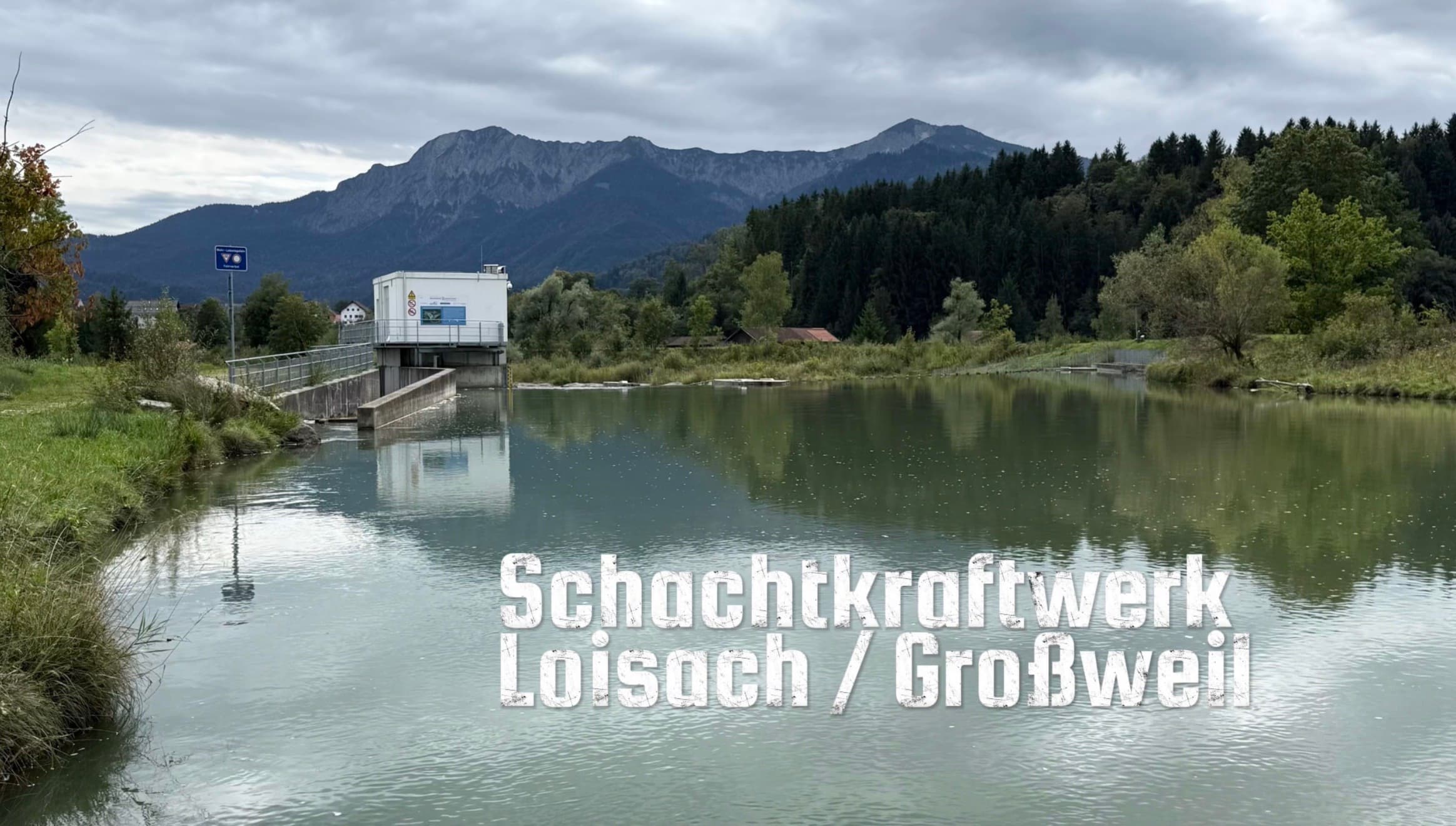
Loisach · Großweil · Hydropower · Monitoring · Natura 2000
Hans Leo Bader
The Großweil shaft hydropower plant shows what happens when scientific monitoring after approval and construction raises new ecological questions — and asks who keeps the river as a whole in view across project boundaries.
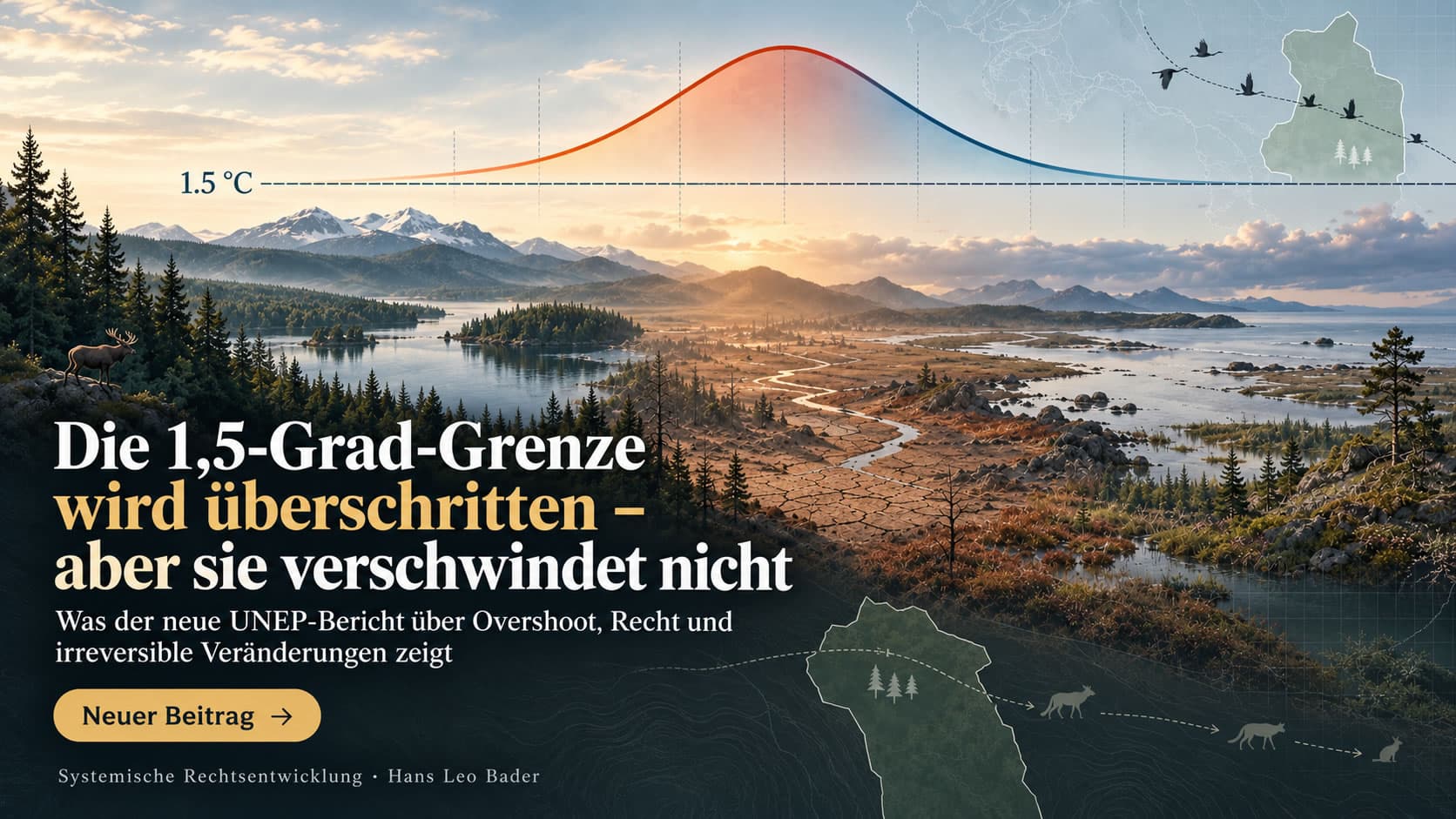
UNEP · Overshoot · Law · Irreversible Change
Hans Leo Bader
A new UNEP report shows why exceeding the 1.5°C limit does not make the benchmark disappear. The article asks what follows for law and planning when system conditions change, risks increase and some losses remain irreversible even if temperatures later decline.

The EU Nature Restoration Regulation as a Test for Learning Law
Hans Leo Bader · Helmut Scheel
How can nature conservation law remain binding when ecological reference conditions are durably altered by climate disruption? The article argues that restoration must address not only target images but also the ecological system conditions that make autonomous development possible — while keeping adaptation legally controlled and evidence-based.

Amazon · Rights of Nature · Puyo Tribunal · 2026
Hans Leo Bader · Alberto Acosta
Six conflicts, six legal settings — and one shared question: what becomes visible when law looks beyond isolated projects to functional ecological systems? The Puyo Tribunal points towards a possible next step in the development of Rights of Nature.
The method is not only tested in practice. It is documented, conceptually refined and published in citable form. The Research Series brings together dossiers, essays, methodological papers and DOI-based publications.
Dossier
Case lines with procedural logic, source references and methodological classification.
Essay
Conceptual clarification and reflection on preventive legal application.
DOI
Citable publications with documentary traceability.
Many Rights of Nature debates focus on legal personhood, standing and representation in court. These questions can be important. But they are not the whole story.
The German path explored here starts elsewhere: with existing constitutional duties, administrative procedures and the preventive obligation of the state to take ecological integrity seriously before damage is done.
Systemic Legal Development does not ask first who may sue on behalf of nature. It asks how the state can be made to see its ecological duties earlier.
A learning constitutional state does not wait until damage has become irreversible or legally unchallengeable. It examines in time whether its own actions still protect the natural foundations of life.
This is where Systemic Legal Development begins.